


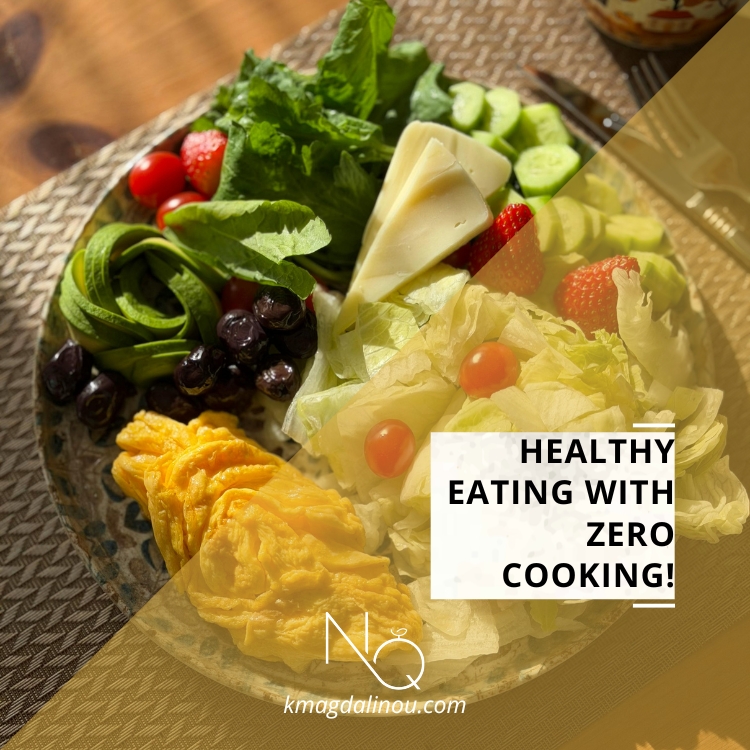

Not long ago, a client visited me and asked the following question during our first session: “I don’t cook, and I don’t want to. Can I still maintain a balanced diet and successfully follow a weight loss plan?” Let’s take a closer look at whether this is actually possible.
Is daily cooking a prerequisite for a nutrition plan?
When someone considers changing their eating habits, there are several important questions they need to ask themselves. What is my motivation for change? What is my desired goal? Which dietitian-nutritionist seems most suitable to support me in this effort? How ready do I feel for this change? And many more. However, there is certainly no need to worry about one’s cooking skills or the time required to prepare home-cooked meals.
The truth is that in the past, spending time in the kitchen was unavoidable if you wanted to follow a healthy eating plan, as there weren’t as many suitable products available in supermarkets and local stores. Today, things have changed. In supermarkets as well as neighborhood shops, you can easily find ready-made healthy meals, as the food industry has shown significant enthusiasm in developing nutritious products in recent years. At the same time, the science of dietetics now strongly supports personalization and is no longer rigidly attached to a strictly defined dietary model, especially when the individual cannot realistically follow it. As a result, meal preparation can be reduced to whatever extent suits each person, without deviating from their plan.
How can we create healthy meals without cooking?
The key steps that help us enjoy ready, healthy meals daily, without effort or cooking, are the following:
1. Smart grocery choices and proper preparation
How can you put together healthy meals easily if your fridge is empty- or worse, if your home is filled with energy-dense, low-nutritional-value foods like cookies, chips, and sweets? Choose foods from all food groups, preferably minimally processed: fresh seasonal fruits and vegetables, boiled legumes, hard-boiled eggs, grilled chicken fillet, canned tuna or sardines, pre-washed salads, dairy products, oats, and more. Finally, anything that requires washing or peeling should be prepped in advance and stored in the fridge, so it’s ready to use when needed. This way, a healthy meal like a sandwich, tortilla, or salad can be ready in no time, with zero cooking.
2. Prevention is better than dealing with the problem
What does this mean in practice? Planning your meals for the day or the week should happen before hunger kicks in. When we’re already hungry, the choices we make are often not the best ones. Decide in advance what you will eat throughout the day, based on your needs. Try to follow the “healthy plate method” at each meal (½ vegetables, ¼ protein, ¼ carbohydrates), so you get a wide range of nutrients and feel more satisfied.
For example:
BREAKFAST: Cherry tomatoes, and a whole-grain toast with double low-fat cheese
LUNCH: Green salad with ready-to-eat canned legumes
DINNER: Hard-boiled eggs, avocado, cherry tomatoes, and carob rusks
3. Stay calm in “emergency” situations
If you’ve already planned your meals but still feel hungry, make sure you have some extra snacks available, such as: one banana with a few almonds, yogurt with fruit, or flavored kefir.
If you haven’t prepared anything at home or prefer not to cook at all you can still maintain a healthy diet by ordering your meals daily. Try to follow the plate method even in this case. Ask for dressings on the side and opt for simpler dishes, like chicken with rice, which are less likely to contain excessive oils or sugar-heavy sauces.
For example:
BREAKFAST: sesame bagel with cream cheese, turkey, and tomato
LUNCH: Chicken with rice, and boiled greens
DINNER: Greek salad with one slice of bread (ask for the olive oil on the side)
4. Above all, enjoyment
Enjoy a healthy and balanced diet on a daily basis, without letting meal preparation become a chore or a barrier to reaching your goals. Free time in modern life is limited and valuable, and it’s perfectly reasonable not to want to spend it cooking and cleaning the kitchen. The solution isn’t to grab whatever food happens to be available, but to make conscious choices guided by health without forgetting the importance of enjoyment.
In conclusion, healthy eating can absolutely be achieved without much cooking even with takeout meals. What matters is stocking up on fresh foods that can easily be turned into complete, nutritious dishes. The stores around us offer a wide variety of options, making it easier than ever to make healthier choices. Even ordering food or relying on delivery can be part of a healthy lifestyle, as long as we take a little extra time to explore options that align with our goals. Your dietitian-nutritionist can design a fully personalized nutrition plan without recipes or cooking, helping you achieve your goals quickly and effectively.